When winter arrives, many people assume better winter boots are the answer to icy conditions. Warm, waterproof, slip resistant boots are often seen as the primary solution for winter safety. But when it comes to actually preventing slips and falls on ice, winter boots alone are not enough—especially in high-risk work environments where one fall can mean lost time, recordable incidents, and serious injury.This article breaks down how ice cleats differ from winter boots and explains why ice cleats are the most effective tool for preventing winter slips and falls. For safety professionals responsible for protecting teams in parking lots, loading docks, walkways, and outdoor work areas, understanding this difference is critical to building an effective winter traction program.
Winter boots are designed for warmth, not ice.
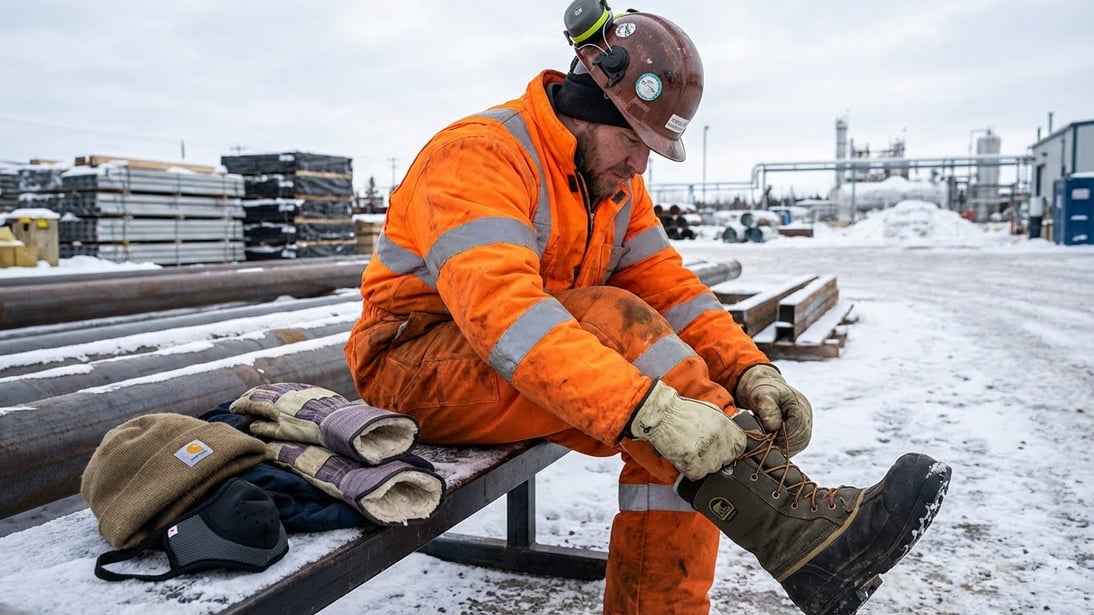
Winter boots are excellent at insulation and moisture protection. Their main purpose is to keep feet warm and dry, which is essential for comfort and frostbite prevention. Even boots marketed as slip resistant are typically tested on wet or oily indoor surfaces, not frozen outdoor ice, compacted snow, or refreeze conditions that you see in real-world industrial settings.
Ice dramatically reduces friction. Rubber outsoles, no matter how aggressive the tread pattern, struggle to grip smooth ice surfaces. As temperatures drop, rubber compounds stiffen and lose flexibility, further reducing their ability to conform to uneven, icy ground. Deep lugs that perform well in loose snow or mud simply skate across sheer ice.
In other words, warm feet do not automatically mean safe footing. A worker can be wearing a premium, insulated, waterproof “winter” boot and still be at significant risk the moment they step onto black ice in a parking lot or cross an untreated ramp. To meaningfully reduce slip-and-fall incidents, you need a solution that goes beyond insulation and directly addresses traction on ice—and that is where ice cleats come in.
Slip resistant soles are not ice resistant
Slip resistance ratings are often misunderstood.
- Usually tested indoors
- Focus on wet tile or oily floors
- Do not account for ice, snow, or refreeze conditions
Ice requires penetration and grip, not just friction. Ice cleats solve this by adding metal contact points that bite into ice where rubber soles cannot.
The most dangerous part of winter is not the cold. It is unpredictable walking surfaces.
Ice forms on parking lots, sidewalks, ramps, stairs, loading docks, and in shaded or low-traffic areas that never fully melt and often refreeze into invisible black ice. These are the exact environments where employees are moving quickly, carrying loads, pushing carts, or stepping in and out of vehicles—conditions that magnify the risk of a slip turning into a recordable incident or serious injury.
Winter boots do nothing to change these surfaces. They insulate your feet but leave the ice untouched. The slick, frozen layer underfoot remains just as hazardous whether the person on it is wearing a basic work boot or a premium insulated winter boot.
Ice cleats do. By adding aggressive, purpose-built traction elements—such as tungsten carbide studs or hardened steel spikes—ice cleats penetrate the ice surface instead of relying on rubber-to-ice friction alone. This mechanical bite is what creates real, reliable traction on frozen ground. When you outfit your workforce with properly selected ice cleats, you are not just making boots “better”—you are fundamentally changing how the foot interacts with the ground, turning unpredictable winter surfaces into walkable, controlled environments.
One pair of ice cleats works with multiple boots
Winter boots are expensive, and many workers already own footwear that meets safety and warmth requirements. Ice cleats offer flexibility that boots cannot.
- Work with existing boots
- Can be issued seasonally
- Cost less than replacing footwear or injury claims
Ice cleats adapt to changing winter conditions
Winter conditions change throughout the day. Surfaces that are safe in the morning can become icy by afternoon, especially in shaded areas, high-traffic zones, or during refreeze events after a melt. A parking lot that looks “wet” at 7 a.m. can turn into black ice by lunch, and a loading dock that was fully salted before shift change can have slick spots again by the time the next crew arrives.
Ice cleats can be worn only when needed and removed indoors, making them practical for real work environments with mixed conditions. Workers can keep ice cleats at the door, in vehicles, or in lockers, put them on when heading outdoors, and take them off before stepping onto finished floors, equipment platforms, or sensitive interior surfaces. This on/off flexibility allows safety teams to deploy serious traction exactly where the risk exists—parking lots, yards, docks, and outdoor walkways—without creating new issues like floor damage, tripping hazards, or non-compliance indoors.
Why ice cleats should come before winter boots
Winter boots are important for comfort and warmth, but they are not a complete slip prevention solution. Even the best insulated, waterproof, “slip resistant” boots are still relying on rubber-to-ice contact, which breaks down the moment surfaces freeze, refreeze, or develop a thin layer of black ice. In high-risk work areas - like parking lots, docks, and outdoor walkways—this gap between perceived protection and actual traction is exactly where recordable incidents happen.
Ice cleats directly address ice hazards, adapt to changing conditions, and deliver immediate safety improvements. By adding aggressive, purpose-built traction elements that bite into ice and packed snow, ice cleats transform an ordinary work boot into a true winter safety system. They can be deployed only when conditions require them, removed for indoor or equipment-sensitive areas, and standardized across your workforce as part of a formal winter traction program.
Final thoughts: Ice cleats vs Winter Boots
There is a dangerous misconception that a high-quality winter boot equals total winter protection. While insulated boots are essential for preventing frostbite and maintaining comfort, they are fundamentally passive equipment. They insulate, but they do not actively grip.
The Reality: Ice is indifferent to the thermal rating of your footwear. Even the most expensive rubber outsoles harden in freezing temperatures, causing the material to lose traction and effectively turn into hard plastic - creating a "sled" effect on icy surfaces.
Winter boots solve the problem of temperature. Ice cleats solve the problem of friction.
If your goal is to make sure every employee goes home safe, you cannot depend on winter boots alone. Once surfaces freeze, dedicated mechanical traction from ice cleats is what stands between a secure step and a serious slip.
.png?width=500&height=59&name=Traction%20Test%20Ice%20Cleat%20CTA%20Banner%20(2).png)