A practical guide to fit, comfort, and real protection
Women are taking on more roles in construction, manufacturing, logistics, utilities, and outdoor service work. As the workforce diversifies, winter safety needs to evolve too. Cold weather introduces slippery surfaces, reduced visibility, and tougher working conditions. When PPE does not properly fit women, the risks grow even higher. Poorly sized gear leads to discomfort, non compliance, and preventable injuries.
This guide walks through the key winter safety considerations for women in industrial and outdoor environments, and why fit and comfort matter more than most employers realize.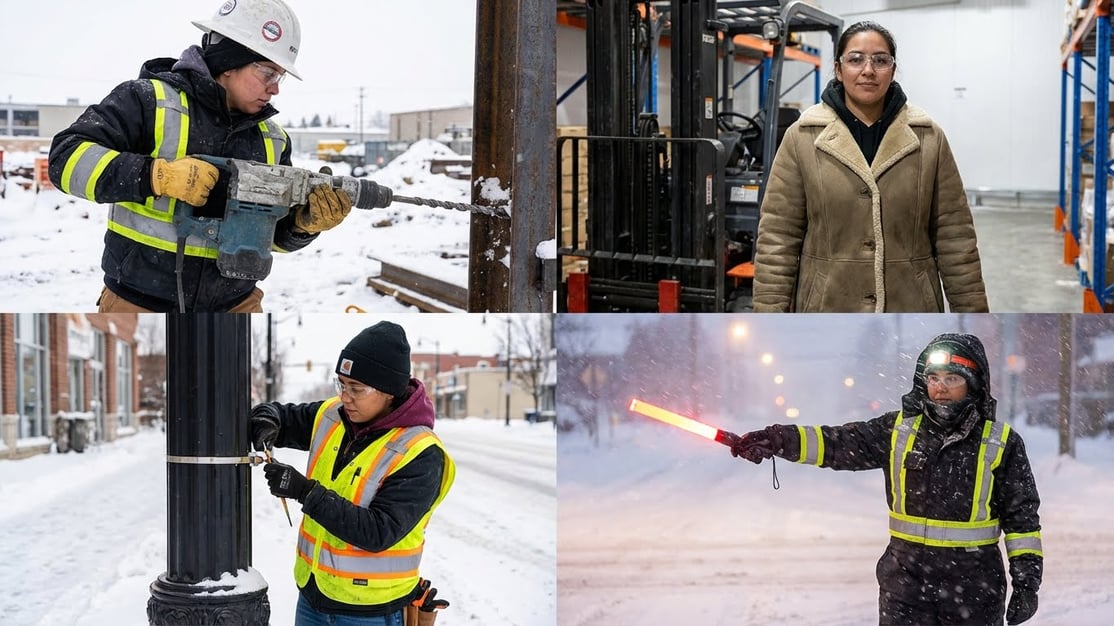
The problem with gear designed for men
Much of today’s PPE is still built around a male body profile. Many companies simply size the gear down and call it “unisex,” but for women this often results in:
- Boots that are too long or too wide
- Gloves that reduce dexterity
- Jackets with excess fabric that can snag
- Traction devices that rotate or slip off smaller footwear
Ill fitting PPE does more than frustrate employees. It leads to reduced stability, trips, slower reaction time, and shortcuts like skipping equipment altogether.
Fit issues that quietly increase winter injury risk
Winter magnifies every small fit problem. Examples include:
- Footwear that is too big which reduces control when walking on ice
- Loose traction aids that twist or shift under the foot
- Oversized outerwear that snags on equipment when workers layer up
- Gloves that don’t match hand size causing grip issues on wet or frosty surfaces
These are not minor inconveniences. They directly affect stability, confidence, and safety performance in slippery conditions.
What proper sizing for women’s winter PPE should look like
Getting PPE right starts with proper fit. Employers should:
- Fit test winter footwear and traction aids instead of guessing
- Offer women specific sizing rather than unisex versions
- Ensure traction devices stay centered on smaller boots
- Provide gloves in a full range of hand sizes
- Teach layering that keeps workers warm without adding bulk that restricts movement
Small adjustments in fit lead to significant improvements in comfort, mobility, and safety.
Comfort is not optional. It is part of safety.
When workers have cold feet, wet socks, or uncomfortable boots, they move faster, take shortcuts, and rush to get out of the cold. These human factors are often behind slip and fall incidents. Comfortable, properly fitted gear helps workers stay focused, stable, and compliant.
Comfort and safety are not separate. They reinforce each other.
What employers can do immediately
To support women working in winter environments, organizations should:
- Ask for direct feedback from women on current PPE
- Avoid ordering only unisex sizes
- Include women in PPE trials and vendor evaluations
- Make rapid swaps when gear does not fit
- Stock traction aids in women specific sizes to prevent rotation and slippage
These simple steps build a more inclusive and safer workplace.
Final thoughts:
Women are an essential part of the industrial and outdoor workforce, and their safety deserves intentional attention. When fit and comfort are treated as central to winter PPE, injury risks fall and job satisfaction rises.