Choosing the right ice cleats for employees starts with understanding how and where they work. Employees who spend their shifts outdoors in snow and ice have different traction requirements than delivery drivers, warehouse workers, or employees walking across icy parking lots.For safety managers and employers, choosing traction without considering the work environment can create unnecessary challenges, especially when employees move between different walking surfaces throughout the day.
To simplify selection, Winter Walking developed the Traction Test, a free online assessment designed to help organizations identify appropriate ice cleat traction for their workforce.
What Are the Best Ice Cleats for Your Employees?
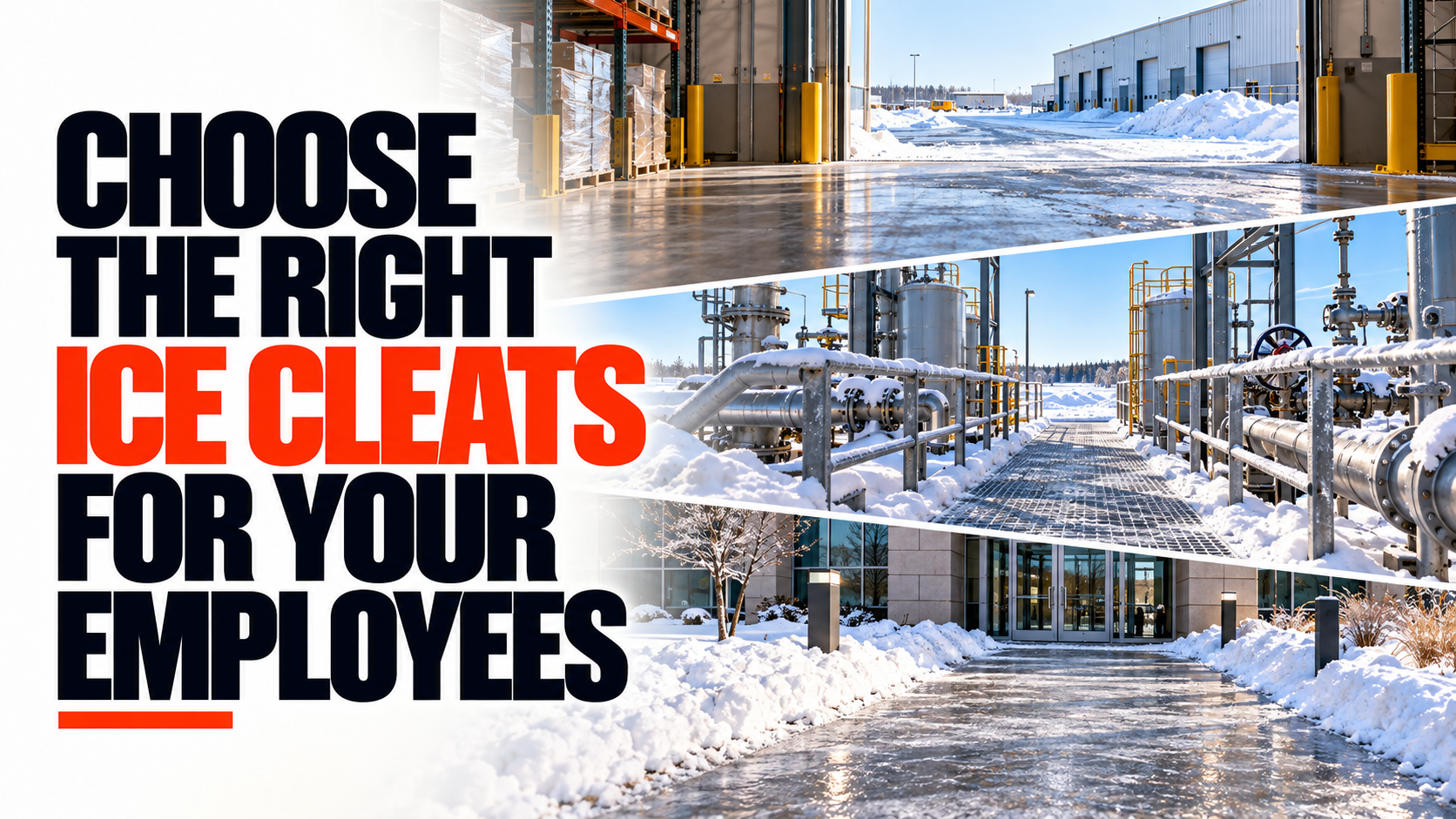
The best ice cleats for employees depend on their job responsibilities, exposure to ice and snow, and whether they drive or move between indoor and outdoor environments. There is no single ice cleat that is ideal for every workplace.
- Utility and outdoor maintenance crews may need aggressive traction for extended outdoor work.
- Delivery drivers and fleet employees may need traction suited to frequent transitions between vehicles, buildings, and outdoor surfaces.
- Warehouse and manufacturing employees may need traction for intermittent outdoor exposure and changing floor surfaces.
- Office and facility employees may need lightweight traction for short walks across icy parking lots and sidewalks.
Introducing the Winter Walking Traction Test
The Winter Walking Traction Test is a free online ice cleat selection assessment that helps employers identify the appropriate type of winter traction for employees. It guides users through four questions about workforce activities and working conditions, then provides a traction recommendation. It is a practical starting point for organizations outfitting different departments, roles, or locations.
.png?width=500&height=59&name=Traction%20Test%20Ice%20Cleat%20CTA%20Banner%20(2).png)
Understanding the Three Types of Workplace Ice Cleat Traction
WALKING TRACTION®: For Limited Winter Exposure
Walking Traction is intended for employees who encounter snow and ice for relatively short periods outdoors, such as office staff crossing parking lots, administrative personnel, or facility employees with occasional outdoor exposure. These workers may not require the same aggressive traction as full-time outdoor crews.
WORKING TRACTION®: For Extended Outdoor Work
Working Traction is designed for employees who spend significant time outdoors in icy or snowy conditions, including utility crews, construction workers, telecommunications technicians, outdoor maintenance teams, and groundskeepers. These products typically use more aggressive traction designs. Employees should follow product-specific guidance when entering buildings or walking on hard indoor surfaces.
TRANSITIONAL TRACTION®: For Indoor, Outdoor, and Driving
Transitional Traction is designed for employees moving frequently between outdoor winter conditions and other environments, including delivery drivers, fleet operators, warehouse staff, manufacturing personnel, and field service technicians. Specialized low-profile or alternative traction technologies can offer greater versatility across environments. Indoor and driving suitability varies by product and surface, so employers must confirm compatibility.
Which Ice Cleats Are Best for Your Industry?
| Industry | Typical winter exposure | Traction to evaluate |
|---|---|---|
| Utilities and energy | Extended outdoor work on ice and snow | Working Traction |
| Delivery and logistics | Driving and frequent indoor/outdoor transitions | Transitional Traction |
| Manufacturing | Indoor work with intermittent outdoor exposure | Transitional Traction |
| Warehousing and distribution | Loading areas, yards, and indoor facilities | Transitional Traction |
| Construction | Extended outdoor exposure | Working Traction |
| Office and commercial facilities | Short walks across icy parking lots | Walking Traction |
| Telecommunications | Field work, vehicle use, and outdoor exposure | Transitional or Working Traction |
| Airlines and ground operations | Outdoor ramp work and varying surfaces | Working or Transitional Traction |
These are starting points, not universal recommendations. Select products based on actual job duties, surfaces, footwear, and safety requirements.
Why Assess Winter Traction Needs Before Purchasing?
Purchasing the same ice cleat for every employee may seem convenient, but it does not account for differences in exposure and work environments. Evaluate:
- Employee exposure: How often do workers encounter snow and ice?
- Walking surfaces: Are they on icy pavement, snow-covered job sites, concrete, indoor flooring, or a combination?
- Transitions: How frequently do employees move between buildings and outdoor areas?
- Driving: Do employees operate vehicles while wearing traction devices?
- Job responsibilities: Do they climb, carry equipment, or perform specialized tasks?
Frequently Asked Questions About Workplace Ice Cleats
How do I know which ice cleats my employees need?
Evaluate outdoor exposure, walking surfaces, and whether employees drive or enter buildings frequently. Winter Walking's free Traction Test helps identify a traction category based on these conditions.
What are the best ice cleats for warehouse workers?
Warehouse employees moving between indoor facilities and icy loading areas may benefit from Transitional Traction, subject to product-specific surface compatibility.
What ice cleats should utility workers wear?
Utility workers spending extended periods outdoors on snow and ice may need Working Traction. Evaluate climbing requirements, footwear compatibility, and job-specific safety practices.
Can employees wear ice cleats indoors?
Some products are designed for indoor/outdoor transitions, while aggressive ice cleats are generally intended for outdoor use. Always follow manufacturer guidance for specific surfaces.
What are the best ice cleats for delivery drivers?
Delivery drivers may benefit from Transitional Traction because they frequently move between vehicles, buildings, sidewalks, and loading areas. Confirm driving compatibility for the specific product.
Should every employee at a company wear the same ice cleats?
Not necessarily. Outdoor maintenance crews may need Working Traction, while office staff at the same location may only need Walking Traction.
Is there a free tool to help businesses choose industrial ice cleats?
Yes. Winter Walking offers a free online Traction Test to help employers identify appropriate ice cleat traction based on working conditions and winter exposure.
Make Ice Cleat Selection Easier for Your Workforce
An effective winter slip-and-fall prevention program starts with traction appropriate to the work employees perform. Whether your organization manages utility crews, delivery drivers, warehouse teams, or several job classifications, selecting ice cleats based on actual working conditions is an important part of winter safety planning.