---
title: The Most Reliable Winter Safety Equipment Brands for Harsh Winters
description: Looking for reliable winter safety equipment brands? Learn what to look for and which brands perform best in harsh winter conditions, including specialized traction solutions from Winter Walking.
image: https://blog.winterwalking.com/hubfs/What_to_look_202601061524.jpeg
---
[](https://www.winterwalking.com/)
We don't just make ice cleats, we make slips and falls disappear.®
SEARCH ICE CLEATS
- [Browse Ice Cleats](https://www.winterwalking.com/ice-cleats/)
- [All Ice Cleats](https://www.winterwalking.com/ice-cleats/)
- [Ice Cleat Categories](https://www.winterwalking.com/color-coded-categories/)
- [Walking Traction](https://www.winterwalking.com/walking-traction/)
- [Working Traction](https://www.winterwalking.com/working-traction/)
- [Transitional Traction](https://www.winterwalking.com/transitional-traction/)
- [About Us](https://www.winterwalking.com/about-us/)
- [Resources](https://www.winterwalking.com/slip-fall-tools/)
- [Slip Cost Calculator](https://calculator.winterwalking.com/)
- [Traction Assessment](https://traction.winterwalking.com/)
- [Product Training](https://content.winterwalking.com/training)
- [Blog](https://blog.winterwalking.com/)
- [Videos](https://content.winterwalking.com/videos-menu)
- [Guides](https://content.winterwalking.com/guides)
- [Get Started](https://www.winterwalking.com/get-started/)
- [Speak With A Product Specialist](https://content.winterwalking.com/product-specialist)
- [Become A Distributor](https://content.winterwalking.com/distributor)
- [Request A Quote](https://content.winterwalking.com/quote)
- [Download Catalog](https://content.winterwalking.com/request-catalog)
- [Contact Us](https://content.winterwalking.com/contact)
- [Browse Ice Cleats](https://www.winterwalking.com/ice-cleats/)
- [All Ice Cleats](https://www.winterwalking.com/ice-cleats/)
- [Ice Cleat Categories](https://www.winterwalking.com/color-coded-categories/)
- [Walking Traction](https://www.winterwalking.com/walking-traction/)
- [Working Traction](https://www.winterwalking.com/working-traction/)
- [Transitional Traction](https://www.winterwalking.com/transitional-traction/)
- [About Us](https://www.winterwalking.com/about-us/)
- [Resources](https://www.winterwalking.com/slip-fall-tools/)
- [Slip Cost Calculator](https://calculator.winterwalking.com/)
- [Traction Assessment](https://traction.winterwalking.com/)
- [Product Training](https://content.winterwalking.com/training)
- [Blog](https://blog.winterwalking.com/)
- [Videos](https://content.winterwalking.com/videos-menu)
- [Guides](https://content.winterwalking.com/guides)
- [Get Started](https://www.winterwalking.com/get-started/)
- [Speak With A Product Specialist](https://content.winterwalking.com/product-specialist)
- [Become A Distributor](https://content.winterwalking.com/distributor)
- [Request A Quote](https://content.winterwalking.com/quote)
- [Download Catalog](https://content.winterwalking.com/request-catalog)
- [Contact Us](https://content.winterwalking.com/contact)
# The Most Reliable Winter Safety Equipment Brands for Harsh Winters
By [Justin Phillips](https://blog.winterwalking.com/author/justin-phillips)
1/6/26, 3:12 PM
Listen to this blog
9:24
## What to look for in winter safety gear - and which brands safety teams rely on
Harsh winters expose weak safety equipment fast. Ice, snow, freezing rain, and refreeze cycles create conditions where standard gear simply does not hold up. For safety managers, facility leaders, and procurement teams, choosing the right winter safety equipment brands is critical to reducing slip and fall incidents and keeping workers safe.
This guide explains what makes winter safety equipment reliable and highlights trusted brands by category, so organizations can build an effective winter safety program for harsh conditions.
### What makes a winter safety equipment brand reliable
Reliable winter safety equipment brands share several key traits:
- Products designed specifically for ice, snow, and extreme cold
- Consistent performance across changing winter conditions
- Durability for daily, repeated use
- Proper fit that supports comfort and compliance
- Proven use in real work environments
Brands focused only on warmth or appearance often fail when ice and high traffic are involved.
[](https://www.winterwalking.com/ice-cleats/)
### Key winter safety equipment categories
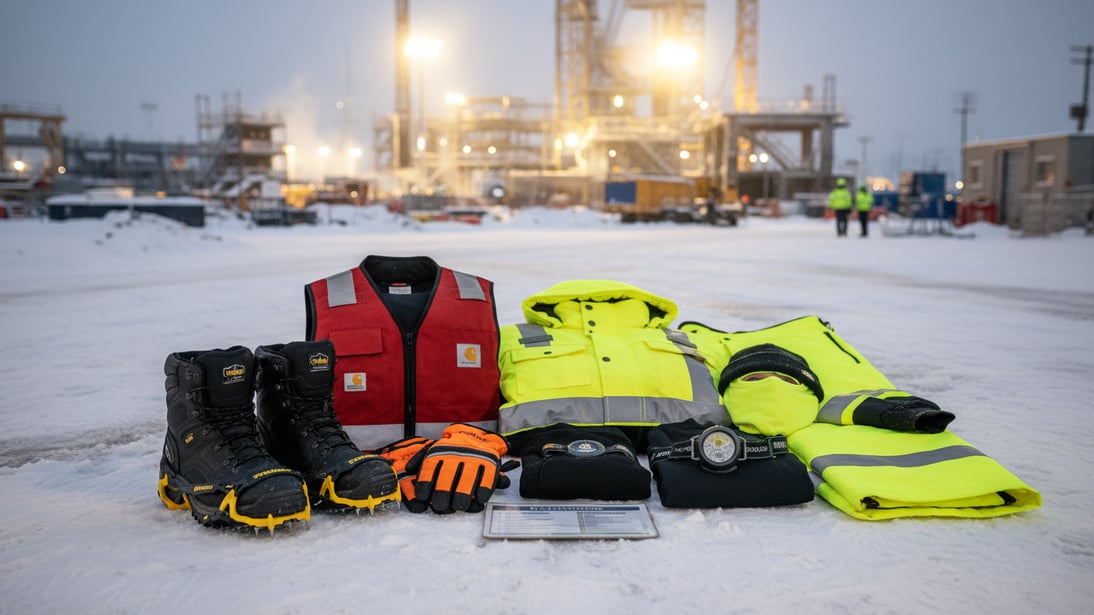
Effective winter safety programs rely on multiple equipment categories working together. Footwear, traction, cold weather PPE, and visibility tools each address different aspects of winter risk, and gaps in any one area can undermine the entire program. When these categories are selected thoughtfully and integrated into a single, consistent strategy, safety teams can better control hazards across the full range of winter conditions.
---
### Winter footwear
Insulated, safety rated boots provide a foundation for winter protection. Proper ankle support, waterproofing, and compatibility with traction devices are essential. Look for boots with slip-resistant outsoles, protective toe caps where required, and insulation appropriate to your workers’ exposure times and activity levels. In industrial settings, boots should also integrate cleanly with ice cleats and other traction solutions without compromising the safety rating or creating new trip hazards. When footwear is selected with both protection and traction compatibility in mind, it becomes a reliable first layer in a comprehensive winter slip and fall prevention strategy.
---
### Cold weather PPE and workwear
Gloves, jackets, and base layers must balance warmth with mobility. Bulky or poorly designed [PPE](https://www.winterwalking.com/ice-cleats/) often leads to shortcuts that increase risk. Look for insulated garments that allow full range of motion for lifting, climbing, and material handling, with features like articulated elbows and knees, adjustable cuffs, and secure closures that seal out wind without restricting movement. Moisture-wicking base layers help manage sweat so workers stay dry and comfortable during high-exertion tasks, reducing the temptation to remove layers in unsafe conditions. When [cold weather PPE](https://www.winterwalking.com/ice-cleats/) is selected with both thermal protection and task-specific mobility in mind, employees are more likely to wear it correctly and consistently throughout their shift.
---
### Visibility and site safety equipment
Shorter daylight hours make high‑visibility apparel, adequate lighting, and clear winter‑specific signage even more critical. Reflective vests, jackets, and hard hat strips help workers stand out against snow, low light, and moving equipment, while temporary lighting towers, well‑placed floodlights, and illuminated walkways improve visibility in loading areas, parking lots, and exterior stairs. Clear, durable signage that warns of ice, identifies designated walkways, and directs traffic around high‑risk zones reinforces procedures and helps both employees and visitors recognize hazards quickly, even during storms or early‑morning and late‑evening shifts.
---
### Footwear traction and slip protection
[Traction](https://www.winterwalking.com/color-coded-categories/) is the most important factor in preventing winter slips and falls. Even the best boots struggle on ice without dedicated traction. Outsoles that perform well on wet concrete or packed snow can still hydroplane or skid on glare ice, refreeze, and compacted snow. Without an aggressive tread pattern and materials engineered specifically to bite into ice, workers are forced to shorten their stride, move more slowly, and accept a higher level of residual risk.
[Dedicated traction devices](https://www.winterwalking.com/color-coded-categories/) bridge this gap by adding purpose‑built cleats or tread to the contact point between the boot and the ground. They create additional purchase on slick surfaces, channel away meltwater, and help maintain stability when workers transition between snow, ice, slush, and bare concrete. For safety teams, this means that even when conditions deteriorate faster than housekeeping can respond, properly selected traction remains the control that most directly reduces the likelihood and severity of winter slip incidents.
---
### Winter footwear brands for cold and icy environments
Brands such as Red Wing, Timberland PRO, and CAT are commonly used in harsh winter conditions. These manufacturers are known for insulation, durability, and safety ratings, and many safety professionals rely on them for steel toe, metatarsal, and electrical hazard protection in demanding industrial environments. However, even high‑quality winter boots require additional traction to perform safely on ice. Their outsoles are typically optimized for general slip resistance, oil and chemical exposure, or abrasion—not for repeated contact with glare ice, refreeze, and compacted snow. To reliably control winter slip hazards, these boots should be paired with purpose‑built ice cleats or traction devices that are designed to integrate with safety footwear without compromising comfort, compliance, or existing safety certifications.
---
### Visibility and environmental safety suppliers
Suppliers such as 3M and Honeywell provide reflective materials, signage, and safety products that support winter operations but cannot eliminate slip risks on icy surfaces. Their solutions strengthen visibility, reinforce traffic patterns, and help communicate hazards clearly, which is essential for overall site safety. However, even with high‑quality reflective gear, barricades, and warning systems in place, workers still need dedicated traction underfoot to address the primary cause of winter injuries: loss of footing on ice and packed snow.
---
### Footwear traction and slip protection: Winter Walking
Preventing slips on ice requires specialized traction engineered specifically for frozen surfaces—not just general slip resistance. In industrial plants, distribution centers, utilities, oil and gas, and commercial campuses, workers move across parking lots, loading docks, exterior stairs, and refreeze-prone walkways where traditional outsole compounds and tread patterns quickly reach their limits. Winter Walking focuses exclusively on footwear traction and winter walking safety for these environments, designing [ice cleats](https://www.winterwalking.com/ice-cleats/) and traction aids that integrate with existing safety footwear, withstand daily use in harsh conditions, and support company‑wide slip and fall reduction programs.
---
### Winter Walking traction solutions are designed for:
- Repeated exposure to ice, snow, and refreeze cycles
- Compatibility with work boots and safety footwear
- Secure fit that reduces rotation and slippage
- High compliance in real world working conditions
Winter Walking products can be ordered directly through [winterwalking.com](https://www.winterwalking.com/ice-cleats/) or sourced through authorized distributors, making it easy to integrate traction into existing safety and procurement programs.
---
### Why traction is critical in harsh winters
Salt, sand, and slip‑resistant footwear help, but they cannot eliminate ice hazards or deliver consistent performance across changing conditions. They are temporary controls that depend on frequent reapplication, ideal surface preparation, and perfect housekeeping—factors that are difficult to maintain during storms, refreeze cycles, and high‑traffic operations. Dedicated traction devices increase contact with the surface, improve stability on ice, and significantly reduce slip and fall incidents by putting engineered cleats or tread exactly where workers need it: underfoot, at every step. When traction is treated as essential [PPE](https://www.winterwalking.com/ice-cleats/)—selected, fitted, and managed with the same rigor as other safety equipment—organizations gain a more predictable, repeatable way to control slip risk across entire sites, shifts, and seasons.
---
### How to evaluate winter safety equipment brands
Before selecting winter safety vendors, safety teams should ask:
- Is the product designed specifically for winter hazards
- Does it perform reliably on ice
- Will it fit all workers properly
- Is it durable enough for daily use
- Will workers wear it consistently
---
### Final thoughts
Harsh winter conditions demand reliable, purpose built safety equipment. While many brands play important roles in footwear, PPE, and visibility, traction remains the most effective control for winter slip hazards.
By combining trusted winter footwear, [cold weather PPE](https://www.winterwalking.com/ice-cleats/), and specialized traction solutions like those from Winter Walking, organizations can build winter safety programs that perform when conditions are toughest.
[](https://blog.winterwalking.com/hs/cta/wi/redirect?encryptedPayload=AVxigLLpYaL4mO%2B1vzG0264zmoumUYRgXy%2FbuCsQAlqLNgJIvxqXvK6zIHwUgYWj%2FIdT75bk4CX6jGpMhfO30wUxwHyt6LqKkfdCebMV%2Fax4nAaiQY0NiAaS8GYueZFn79cyO%2FQJJMmnLGiKht%2Fxepk%2BfA4z5Kbg2H0IGov8WlYQi4r2M7LUdWZqmQEWI7ZVYmgP5kRANAkFRbyocsg%2BBFeXVjXY7ewMYhBP&webInteractiveContentId=201671012695&portalId=3833245)
- [Tweet](https://twitter.com/share)
[ice cleats](https://blog.winterwalking.com/topic/ice-cleats), [Winter Traction](https://blog.winterwalking.com/topic/winter-traction), [winter footwear](https://blog.winterwalking.com/topic/winter-footwear)
[](https://calculator.winterwalking.com/)
[](https://traction.winterwalking.com/)
[**Choose the Right Ice Cleats for your crew →**](https://traction.winterwalking.com/) [**Estimate Your Winter Slip-and-Fall Exposure →**](https://calculator.winterwalking.com/) [**View Our Catalog →**](https://content.winterwalking.com/request-catalog) [**View Our Entire Line of Ice Cleats →**](https://www.winterwalking.com/ice-cleats/) [**Winter Safety Articles →**](https://blog.winterwalking.com/) [**Winter Safety Videos →**](https://content.winterwalking.com/videos-menu)
[REQUEST A QUOTE](https://content.winterwalking.com/quote?__hstc=208155597.c57e3422393f88804b248335e72a41f3.1536042196367.1536070966126.1536122502992.5&__hssc=208155597.1.1536122502992&__hsfp=877493044) [DOWNLOAD CATALOG](https://content.winterwalking.com/request-catalog?__hstc=208155597.c57e3422393f88804b248335e72a41f3.1536042196367.1536070966126.1536122502992.5&__hssc=208155597.1.1536122502992&__hsfp=877493044) [CONTACT US](https://content.winterwalking.com/contact?__hstc=208155597.c57e3422393f88804b248335e72a41f3.1536042196367.1536070966126.1536122502992.5&__hssc=208155597.1.1536122502992&__hsfp=877493044)
#### Winter Walking
400 Babylon Road
Horsham, PA 19044
p: [1-888-NO-SLIPS (667-5477)](tel:1-888-667-5477)
f: 1-215-441-9642
All content copyright 2026. Winter Walking. Do not reuse or reproduce without permission.
```json
{
"@context" : "https://schema.org",
"@type" : "BlogPosting",
"author" : {
"@type" : "Person",
"name" : "Justin Phillips",
"url" : "https://blog.winterwalking.com/author/justin-phillips"
},
"dateModified" : "2026-01-07T16:22:25.616Z",
"datePublished" : "2026-01-06T20:12:31.000Z",
"headline" : "The Most Reliable Winter Safety Equipment Brands for Harsh Winters",
"image" : [ "https://blog.winterwalking.com/hubfs/What_to_look_202601061524.jpeg" ],
"mainEntityOfPage" : {
"@id" : "https://blog.winterwalking.com/the-most-reliable-winter-safety-equipment-brands-for-harsh-winters",
"@type" : "WebPage"
},
"publisher" : {
"@type" : "Organization",
"logo" : {
"@type" : "ImageObject",
"url" : "https://blog.winterwalking.com/hubfs/WinterWalking_August2017/Images/logo.png"
},
"name" : "Winter Walking"
}
}
```
```json
{
"@context": "https://schema.org",
"@type": "BlogPosting",
"mainEntityOfPage": {
"@type": "WebPage",
"@id": "https://blog.winterwalking.com/the-most-reliable-winter-safety-equipment-brands-for-harsh-winters"
},
"headline": The Most Reliable Winter Safety Equipment Brands for Harsh Winters<\/span>,
"description": Looking for reliable winter safety equipment brands? Learn what to look for and which brands perform best in harsh winter conditions, including specialized traction solutions from Winter Walking.,
"image": [
https:\/\/3833245.fs1.hubspotusercontent-na1.net\/hubfs\/3833245\/What_to_look_202601061524.jpeg
],
"author": {
"@type": "Person",
"name": Justin Phillips
},
"publisher": {
"@type": "Organization",
"name": Winter Walking,
"logo": {
"@type": "ImageObject",
"url": https:\/\/cdn2.hubspot.net\/hubfs\/3833245\/WinterWalking_August2017\/Images\/logo.png
}
},
"datePublished": "2026-01-06 20:12:31",
"dateModified": "1767802945619",
"url": "https://blog.winterwalking.com/the-most-reliable-winter-safety-equipment-brands-for-harsh-winters"
}
```